Walk north from Markt
Follow Boschstraat out of the centre towards the Eiffel building. This is an easy extension to a morning around the shopping streets, or a separate afternoon if you want to read the history panels and stay for a film.
You do not need to make a complicated route. Sphinxpassage, the Bassin and Lumière are the main anchors. Start with the passage so that the industrial buildings around you have some context before the food and film part of the visit.
Sphinxpassage: read the tiles
The covered passage beside the Eiffel building tells the history of Maastricht's ceramics industry across 26 chapters. The story is printed on nearly 30,000 tiles along a 120-metre route. Entry is free; check the current opening times if you are coming late.
Look for the everyday products as well as the factory pictures. Plates, decorative patterns, advertisements and sanitary ware show the range of what the city made. The passage is more rewarding if you read a few complete panels than if you just walk quickly from one end to the other.
The address is Boschstraat 23B. It is an especially useful stop if you want some historical context without buying a museum ticket. It is covered, but it does not replace a warm indoor café on a cold day.
Read the labour history too
The industrial story includes difficult working conditions and child labour. The city's account of Regout's factories discusses how his reputation changed and how later commemorations tried to reshape it. That context matters alongside the attractive objects and reused buildings.
When you leave the passage, look back at the size of the complex. Ceramics was not a small craft business tucked behind a shopfront here. It shaped employment, housing and the physical layout of this part of Maastricht.
Continue to the Bassin
The harbour makes a good next stop after the passage. Walk around it before choosing somewhere to sit, particularly if the weather is good. The archive photograph on this page shows an earlier version of the area; use it to compare the industrial setting with the streets you are looking at now.
For photographs, include the water and buildings rather than standing in the middle of the busiest walkway. If your group is hungry, this is a sensible point to stop instead of continuing a history route nobody is listening to anymore.
Finish at Lumière
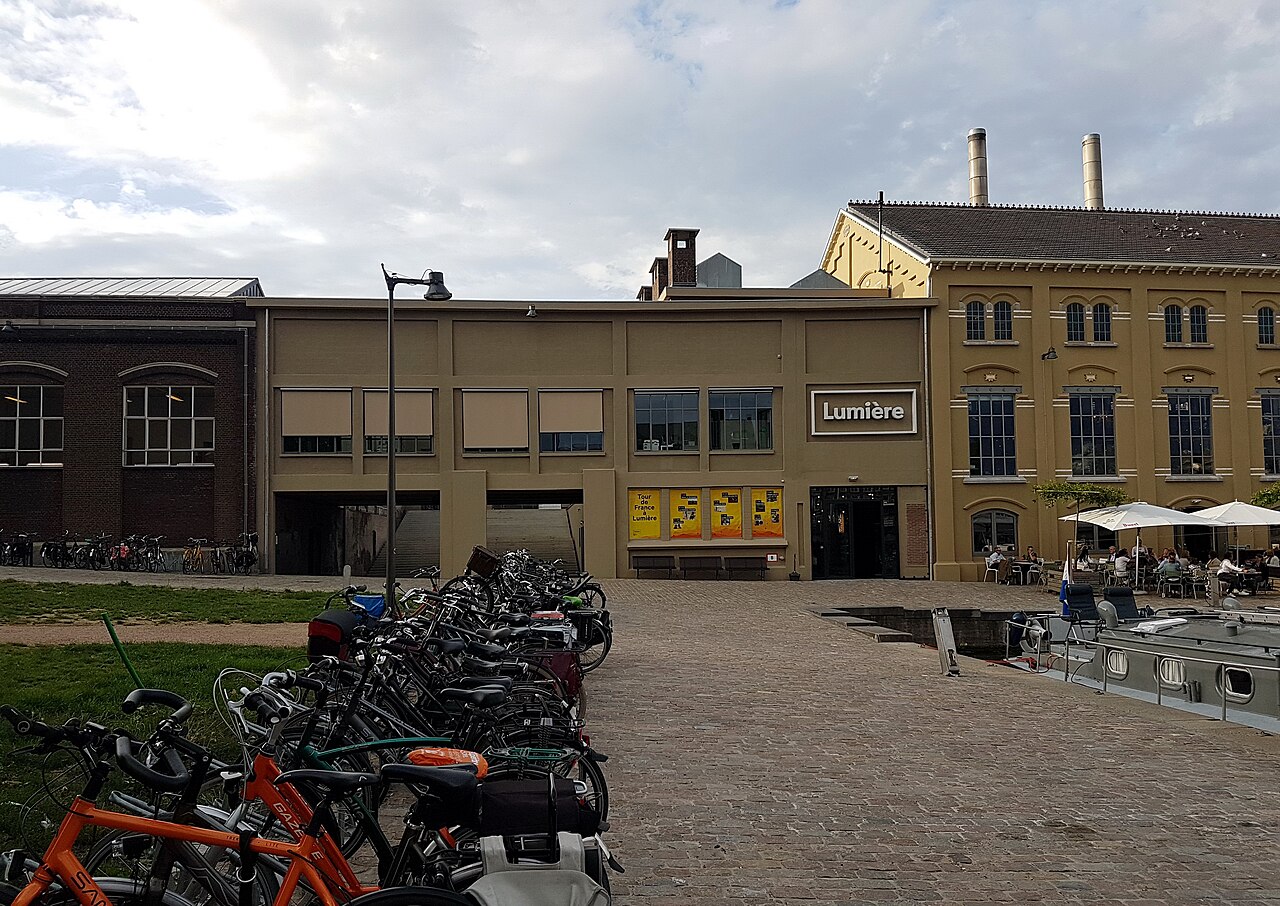
Lumière gives the area an evening destination as well as an afternoon walk. Check the programme, choose a screening and work dinner around it. The café and cinema share an address but have different practical schedules.
For a group of friends, a film is optional. You can spend the afternoon around Sphinx, eat near the Bassin and head back through the centre afterwards. Check current events at the nearby cultural venues if you would rather see live music than sit through a screening.
What to combine it with
With Markt: make the market your first stop on Wednesday or Friday, then walk north. With the old centre: visit Dominicanen and Vrijthof before heading to Sphinx. With a rainy day: use the passage as a short covered stop, followed by a booked film.
Do not add Sint Pieter at the opposite end of town just to fill the route. Sphinx has enough for an afternoon when you include the history, a meal and a screening. The hill belongs in another half-day.